
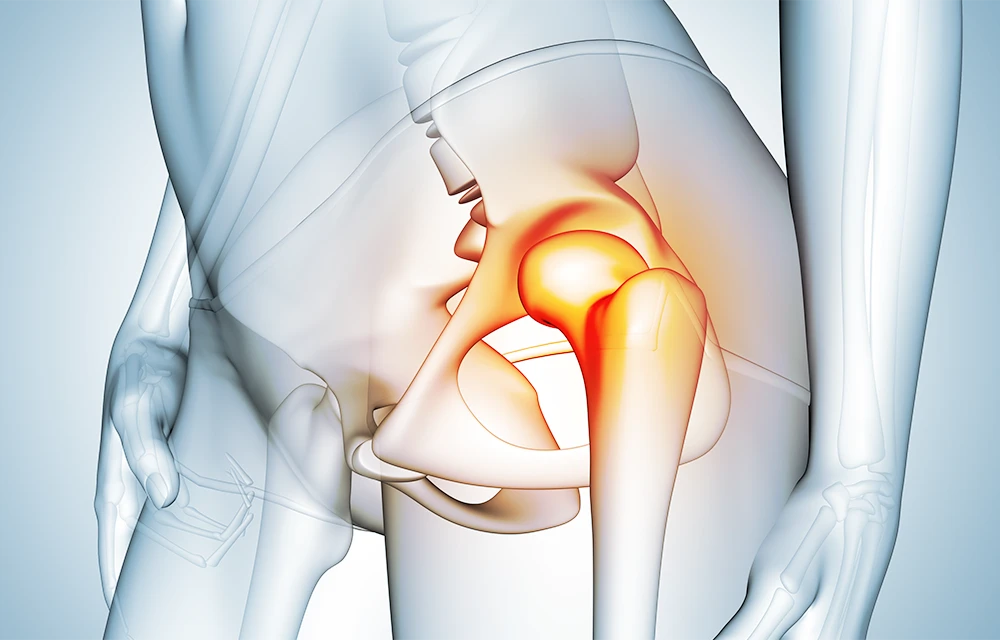
As early as the mid-30s, a woman’s progesterone levels begin to decline, followed by her estrogen levels, until they drop completely after her periods stop (menopause). However, these two steroid hormones are essential for maintaining our bones: progesterone protects against bone loss, while estrogen builds bone. This is even more important during a woman’s menopause, when she loses 3% of her bone density annually after her periods stop. I therefore recommend that every woman undergo a bone density measurement one year after her last period.
Osteoporosis takes around 20 years to manifest itself, depending on genetic predisposition and epigenetic factors, which is enough time to take preventive measures. The preliminary stage of osteoporosis is called osteopenia. At this point at the latest, i.e. when bone density falls to a negative value (-1 to -2.5), those affected should take intensive care of their bone health.
Men have more muscle mass by nature and are therefore less likely to develop osteoporosis than women, but they can also be affected. This is especially true for thin men whose mothers have severe osteoporosis.
When our bones break, we become dependent on care, so it is essential for a high quality of life in old age to ensure adequate bone protection through regular checkups, strength training, and hormone replacement therapy. In my practice, I offer a wide range of treatments, from basic measures to infusion therapy (bisphosphonate infusions). As a specialist in general medicine with expertise in medical strengthening therapy, as a hormone coach, and as a certified expert in general osteoporosis care (DVO), I am familiar with the diagnosis and treatment of bone metabolism problems and would be happy to support you in this process.